 Seit Tagen zelebrieren viele Medien und auch Google das 50-jährige Jubiläum der Mondlandung, aber erst am heutigen Sonntag, dem 21. Juli 2019, sind es tatsächlich 50 Jahre. Wer heute eine virtuelle Rakete zünden und sich noch einmal ausführlich mit dem Planet Mond und der Landung der US-Astronauten beschäftigen möchte, findet hier noch einmal eine Übersicht über alle Angebote, die Google anlässlich des Jubiläums geschaffen hat.
Suchergebnisse für doodle nasa
Seit Tagen zelebrieren viele Medien und auch Google das 50-jährige Jubiläum der Mondlandung, aber erst am heutigen Sonntag, dem 21. Juli 2019, sind es tatsächlich 50 Jahre. Wer heute eine virtuelle Rakete zünden und sich noch einmal ausführlich mit dem Planet Mond und der Landung der US-Astronauten beschäftigen möchte, findet hier noch einmal eine Übersicht über alle Angebote, die Google anlässlich des Jubiläums geschaffen hat.
 Am 20. Juli, also am kommenden Wochenende, jährt sich der Tag der ersten Mondlandung zum 50. mal. Ein halbes Jahrhundert ist bereits vergangen, seitdem Neil Armstrong, Buzz Aldrin und Michael Collins erstmals auf dem Mond gelandet sind und der erste Mensch seinen Fuß auf den Mond setzen konnte. Google hat die Feierlichkeiten für dieses große Jubiläum bereits jetzt eingeläutet und bietet jede Menge Informationsmaterial rund um die Mondlandung. Mit Google Maps und Streetview könnt ihr sogar selbst virtuell auf den Mond und in den Weltraum reisen.
Die Woche 46 neigt sich wieder dem Ende zu und ist mittlerweile beim Sonntag angekommen. Zeit also, auf die vergangenen sieben Tage zurückblicken und wieder unseren kleinen Wochenrückblick zu beginnen. Wie in jeder Woche Woche blicken wir sowohl auf die beliebtesten Artikel der Kalenderwoche 48 vom 25. November bis zum 1. Dezember dieses Jahres als auch auf die gleiche Woche vor fünf Jahren und vor zehn Jahren zurück.
Am gestrigen 27. September hat Google groß den 20. Geburtstag zelebriert und hat anlässlich dessen ein schönes Video-Doodle geschaltet und ermöglicht nun auch einen interaktiven Streetview-Blick in die Gründer-Garage. Aber auch die vielen Google-Dienste haben die Zahl 20 zum Anlass genommen, Toplisten aufzustellen. Heute zeigt Google Arts & Culture die 20 sehenswertesten Schätze in der eigenen Datenbank.
Die Woche 31 neigt sich wieder dem Ende zu und ist mittlerweile beim Sonntag angekommen. Zeit also, auf die vergangenen sieben Tage zurückblicken und wieder unseren kleinen Wochenrückblick zu beginnen. Wie in jeder Woche Woche blicken wir sowohl auf die beliebtesten Artikel der Kalenderwoche 31 vom 29. Juli bis zum 4. August dieses Jahres als auch auf die gleiche Woche vor fünf Jahren und vor zehn Jahren zurück.
Die Woche 23 neigt sich wieder dem Ende zu und ist mittlerweile beim Sonntag angekommen. Zeit also, auf die vergangenen sieben Tage zurückblicken und wieder unseren kleinen Wochenrückblick zu beginnen. Wie in jeder Woche Woche blicken wir sowohl auf die beliebtesten Artikel der Kalenderwoche 23 vom 3. Juni bis zum 9. Juni dieses Jahres als auch auf die gleiche Woche vor fünf Jahren und vor zehn Jahren zurück.
Wir haben den letzten Tag des Jahres erreicht und werden in einigen Stunden das neue Jahr 2018 begrüßen. Zeit für einen kleinen Rückblick auf die populärsten Artikel im GoogleWatchBlog in diesem Jahr, mit vielen Themen die vielleicht schon wieder in Vergessenheit geraten sind. Insgesamt haben wir in diesem Jahr 2497 Artikel rund um Google, YouTube, Android und allen weiteren damit verbundenen Bereichen veröffentlicht.
Das Jahr 2017 neigt sich dem Ende zu und überall gibt es derzeit Jahresrückblicke, von denen wir euch mit Bezug auf Google natürlich berichtet haben. Jetzt zieht auch der offizielle Google-Blog ein Resümee und fasst noch einmal die wichtigsten Dinge des Jahres zusammen - zumindest aus der Sicht von Google. Dabei geht es bei weitem nicht nur um Produkt-Vorstellungen, sondern auch um Events und andere Dinge die in diesem Jahr geschehen sind.
Und auch die Woche 50 neigt sich wieder dem Ende zu und ist mittlerweile beim Sonntag angekommen. Zeit also, auf die vergangenen sieben Tage zurückblicken und wieder unseren kleinen Wochenrückblick zu beginnen. Wie in jeder Woche Woche blicken wir sowohl auf die beliebtesten Artikel der Kalenderwoche 50 vom 10. Dezember bis zum 16. Dezember dieses Jahres als auch auf die gleiche Woche vor fünf Jahren und vor zehn Jahren zurück.
Und auch die Woche 37 neigt sich wieder dem Ende zu und ist mittlerweile beim Sonntag angekommen. Zeit also, auf die vergangenen sieben Tage zurückblicken und wieder unseren kleinen Wochenrückblick zu beginnen. Wie in jeder Woche Woche blicken wir sowohl auf die beliebtesten Artikel der Kalenderwoche 37 vom 10. September bis zum 16. September dieses Jahres als auch auf die gleiche Woche vor fünf Jahren und vor zehn Jahren zurück.
Am 20. Juli, also am kommenden Wochenende, jährt sich der Tag der ersten Mondlandung zum 50. mal. Ein halbes Jahrhundert ist bereits vergangen, seitdem Neil Armstrong, Buzz Aldrin und Michael Collins erstmals auf dem Mond gelandet sind und der erste Mensch seinen Fuß auf den Mond setzen konnte. Google hat die Feierlichkeiten für dieses große Jubiläum bereits jetzt eingeläutet und bietet jede Menge Informationsmaterial rund um die Mondlandung. Mit Google Maps und Streetview könnt ihr sogar selbst virtuell auf den Mond und in den Weltraum reisen.
Die Woche 46 neigt sich wieder dem Ende zu und ist mittlerweile beim Sonntag angekommen. Zeit also, auf die vergangenen sieben Tage zurückblicken und wieder unseren kleinen Wochenrückblick zu beginnen. Wie in jeder Woche Woche blicken wir sowohl auf die beliebtesten Artikel der Kalenderwoche 48 vom 25. November bis zum 1. Dezember dieses Jahres als auch auf die gleiche Woche vor fünf Jahren und vor zehn Jahren zurück.
Am gestrigen 27. September hat Google groß den 20. Geburtstag zelebriert und hat anlässlich dessen ein schönes Video-Doodle geschaltet und ermöglicht nun auch einen interaktiven Streetview-Blick in die Gründer-Garage. Aber auch die vielen Google-Dienste haben die Zahl 20 zum Anlass genommen, Toplisten aufzustellen. Heute zeigt Google Arts & Culture die 20 sehenswertesten Schätze in der eigenen Datenbank.
Die Woche 31 neigt sich wieder dem Ende zu und ist mittlerweile beim Sonntag angekommen. Zeit also, auf die vergangenen sieben Tage zurückblicken und wieder unseren kleinen Wochenrückblick zu beginnen. Wie in jeder Woche Woche blicken wir sowohl auf die beliebtesten Artikel der Kalenderwoche 31 vom 29. Juli bis zum 4. August dieses Jahres als auch auf die gleiche Woche vor fünf Jahren und vor zehn Jahren zurück.
Die Woche 23 neigt sich wieder dem Ende zu und ist mittlerweile beim Sonntag angekommen. Zeit also, auf die vergangenen sieben Tage zurückblicken und wieder unseren kleinen Wochenrückblick zu beginnen. Wie in jeder Woche Woche blicken wir sowohl auf die beliebtesten Artikel der Kalenderwoche 23 vom 3. Juni bis zum 9. Juni dieses Jahres als auch auf die gleiche Woche vor fünf Jahren und vor zehn Jahren zurück.
Wir haben den letzten Tag des Jahres erreicht und werden in einigen Stunden das neue Jahr 2018 begrüßen. Zeit für einen kleinen Rückblick auf die populärsten Artikel im GoogleWatchBlog in diesem Jahr, mit vielen Themen die vielleicht schon wieder in Vergessenheit geraten sind. Insgesamt haben wir in diesem Jahr 2497 Artikel rund um Google, YouTube, Android und allen weiteren damit verbundenen Bereichen veröffentlicht.
Das Jahr 2017 neigt sich dem Ende zu und überall gibt es derzeit Jahresrückblicke, von denen wir euch mit Bezug auf Google natürlich berichtet haben. Jetzt zieht auch der offizielle Google-Blog ein Resümee und fasst noch einmal die wichtigsten Dinge des Jahres zusammen - zumindest aus der Sicht von Google. Dabei geht es bei weitem nicht nur um Produkt-Vorstellungen, sondern auch um Events und andere Dinge die in diesem Jahr geschehen sind.
Und auch die Woche 50 neigt sich wieder dem Ende zu und ist mittlerweile beim Sonntag angekommen. Zeit also, auf die vergangenen sieben Tage zurückblicken und wieder unseren kleinen Wochenrückblick zu beginnen. Wie in jeder Woche Woche blicken wir sowohl auf die beliebtesten Artikel der Kalenderwoche 50 vom 10. Dezember bis zum 16. Dezember dieses Jahres als auch auf die gleiche Woche vor fünf Jahren und vor zehn Jahren zurück.
Und auch die Woche 37 neigt sich wieder dem Ende zu und ist mittlerweile beim Sonntag angekommen. Zeit also, auf die vergangenen sieben Tage zurückblicken und wieder unseren kleinen Wochenrückblick zu beginnen. Wie in jeder Woche Woche blicken wir sowohl auf die beliebtesten Artikel der Kalenderwoche 37 vom 10. September bis zum 16. September dieses Jahres als auch auf die gleiche Woche vor fünf Jahren und vor zehn Jahren zurück.
 Nach knapp 20 Jahren geht in wenigen Stunden die Mission der Weltraumsonde Cassini-Huygens zu Ende - und das mit einem Spektakel. Statt die Sonde einfach sich selbst zu überlassen oder sie so weit wie möglich ins All hinaus zu schießen, wird sie am heutigen Vormittag in die Atmosphäre des Saturn eintreten und dabei verglühen. Wer das Spektakel Live verfolgen möchte, kann es sich bei YouTube im Livestream ansehen.
 In etwa sechs Stunden wird Google die neue Version des Betriebssystems Android O vorstellen und der langen Vorlaufphase mit den vier Developer-Previews ein Ende setzen. In diesem Jahr wird man den Release gleich mit einem großen Event begleiten, so dass diese Vorstellung möglicherweise noch lange im Kopf der Menschen bleiben wird. Hier könnt ihr die Livestreams zur Sonnenfinsternis und zur Vorstellung direkt bei uns im Blog verfolgen.

 Zwar hat Google "40 Jahre Mondlandung" (noch) kein Google Doodle gewidmet, aber dennoch gedenkt dem "großen Schritt für die Menschheit" und hat in Google Earth 5 nun auch den Mond integriert.
Wie der Mars und die Erde wird der Erdtrabant in 3D als Kugel angezeigt. Hier findet man auch sehr viele Informationen zu Mond. Verschiedene Flaggen zeigen zum Beispiel die Landeplätze der Amerikaner sowie der Sonden von China und der Russen (wobei sich letztere nur sehr schwer unterscheiden lassen, beide haben fast komplett rote Flaggen).
Zwar hat Google "40 Jahre Mondlandung" (noch) kein Google Doodle gewidmet, aber dennoch gedenkt dem "großen Schritt für die Menschheit" und hat in Google Earth 5 nun auch den Mond integriert.
Wie der Mars und die Erde wird der Erdtrabant in 3D als Kugel angezeigt. Hier findet man auch sehr viele Informationen zu Mond. Verschiedene Flaggen zeigen zum Beispiel die Landeplätze der Amerikaner sowie der Sonden von China und der Russen (wobei sich letztere nur sehr schwer unterscheiden lassen, beide haben fast komplett rote Flaggen).
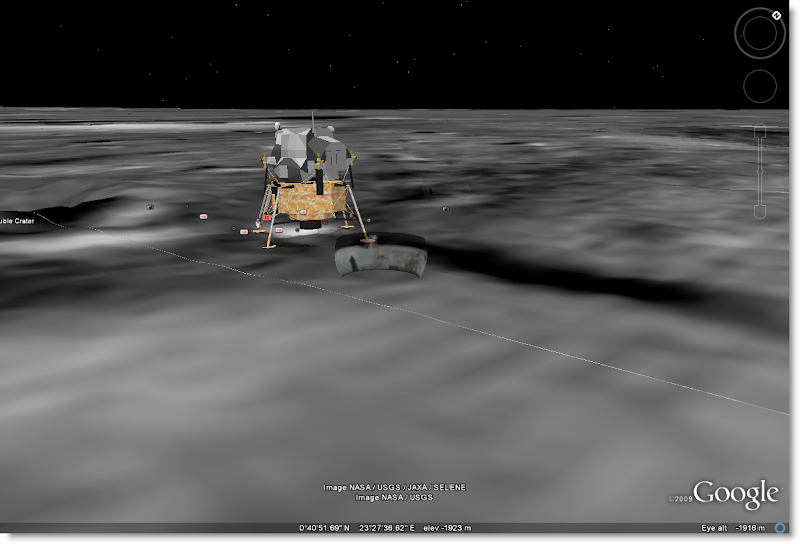
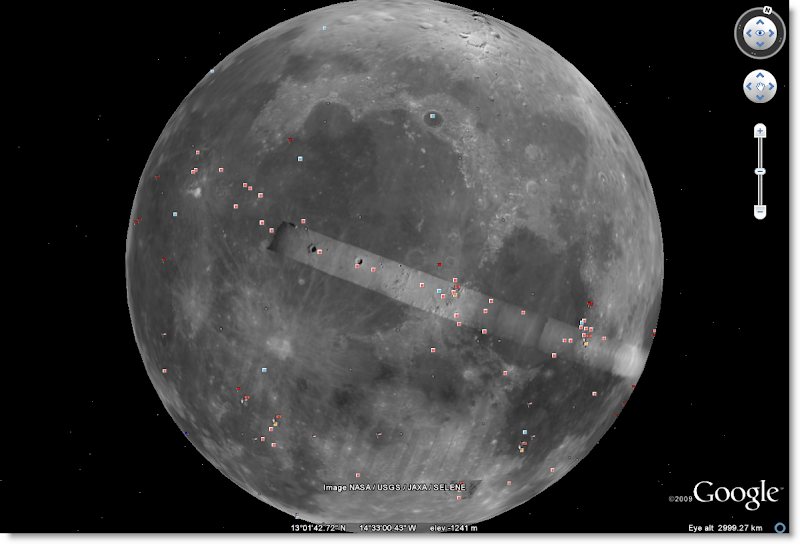 Der Mond lässt sich in Google Moon mit auch in geführten Touren auf den Spuren der Astronauten Buzz Aldrin (Apollo 11) und Jack Schmitt (Apollo 17) erkunden. Daneben kann man hochauflösende Panoramas, noch nie veröffentlichte Filme und die Mondlandefähren in 3D anschauen. Auch findet man die Fahrzeuge der Teilnehmer vom Lunar X Prize.
Die Daten stammen von der Japanischen Raumfahrt-Agentur JAXA sowie dem astronomische Forschungsinstitution NAOJ.
"Zwei Menschen betraten vor 40 Jahren den Mond zum ersten Mal. Und seit heute kann jeder Google Earth-Nutzer ihren Fußspuren folgen", so Michael Weiss-Malik, Produktmanager des Mondbereiches in Google Earth. "Wir bieten Millionen Menschen auf der ganzen Welt eine beispiellose 3-D-Präsentation der Apollo-Missionen."
"Was wir heute bekannt geben, ist das Ergebnis einer dauerhaften und engen Partnerschaft mit Google, die das Ames Research Center im November 2006 aufgenommen hat. Damals haben wir das Space Act Agreement unterzeichnet, um die Zusammenarbeit mit unserem Nachbarn im Silicon Valley zu intensivieren", erläutert S. Pete Worden, Leiter des NASA Ames Research Center in Moffett Field, Kalifornien. "Wir freuen uns, dass wir gemeinsam mit Google jedem Computernutzer die virtuelle Erkundung des Mondes ermöglichen."
Der Mond lässt sich in Google Moon mit auch in geführten Touren auf den Spuren der Astronauten Buzz Aldrin (Apollo 11) und Jack Schmitt (Apollo 17) erkunden. Daneben kann man hochauflösende Panoramas, noch nie veröffentlichte Filme und die Mondlandefähren in 3D anschauen. Auch findet man die Fahrzeuge der Teilnehmer vom Lunar X Prize.
Die Daten stammen von der Japanischen Raumfahrt-Agentur JAXA sowie dem astronomische Forschungsinstitution NAOJ.
"Zwei Menschen betraten vor 40 Jahren den Mond zum ersten Mal. Und seit heute kann jeder Google Earth-Nutzer ihren Fußspuren folgen", so Michael Weiss-Malik, Produktmanager des Mondbereiches in Google Earth. "Wir bieten Millionen Menschen auf der ganzen Welt eine beispiellose 3-D-Präsentation der Apollo-Missionen."
"Was wir heute bekannt geben, ist das Ergebnis einer dauerhaften und engen Partnerschaft mit Google, die das Ames Research Center im November 2006 aufgenommen hat. Damals haben wir das Space Act Agreement unterzeichnet, um die Zusammenarbeit mit unserem Nachbarn im Silicon Valley zu intensivieren", erläutert S. Pete Worden, Leiter des NASA Ames Research Center in Moffett Field, Kalifornien. "Wir freuen uns, dass wir gemeinsam mit Google jedem Computernutzer die virtuelle Erkundung des Mondes ermöglichen."
 Weitere Features sind:
-Ausgewählte hochauflösende Satellitenbilder mit detaillierte Beschreibungen bestimmter Mondregionen aus "Lunar Image of the Week" von der Arizona State University.
-Bilder von Raumfahrzeugen: aufgenommen von der Apollo Metric Camera, Clementine und Lunar Orbiter.
-Apollo-Missionen: eine Zeitreise zurück in die Apollo-Ära mit den Landeplätzen der Apollo-Missionen 11 bis 17, Panoramabilder à la "Street View" und bisher unveröffentlichte Raumfahrzeug-Filmaufnahmen. Nutzer können nachlesen, was Astronauten auf ihren Mondfahrten beobachtet haben.
-Geführte Touren: Nutzer können an kommentierten Mond-Rundgängen teilnehmen und auf den Spuren der Apollo-Astronauten Buzz Aldrin (Apollo 11) und Jack Schmitt (Apollo 17) wandeln.
-Historische Karten: geologische und topografische Karten, die für die Apollo-Missionen zum Mond verwendet wurden.
-Menschliche Artefakte: Forschungsgeräte, die Raumfahrer auf dem Mond zurückgelassen haben und wo sie heute zu finden sind. Dazu gehören Gerätschaften aus den Vereinigten Staaten, der Sowjetunion, China, der EU, Japan und Indien, die teilweise auch als 3-D-Modelle zur Verfügung stehen.
Zahlreiche Videos findet man in diesem YouTube Channel.
Wie bekomme ich Google Moon in Google Earth:
Wenn du Nutzer von Google Earth 5.0 bist, kannst du Moon über das Menü auswählen mit dem du zwischen Earth, Mars und Sky wechseln. Eine Neuinstallation ist nicht notwendig.
Weitere Features sind:
-Ausgewählte hochauflösende Satellitenbilder mit detaillierte Beschreibungen bestimmter Mondregionen aus "Lunar Image of the Week" von der Arizona State University.
-Bilder von Raumfahrzeugen: aufgenommen von der Apollo Metric Camera, Clementine und Lunar Orbiter.
-Apollo-Missionen: eine Zeitreise zurück in die Apollo-Ära mit den Landeplätzen der Apollo-Missionen 11 bis 17, Panoramabilder à la "Street View" und bisher unveröffentlichte Raumfahrzeug-Filmaufnahmen. Nutzer können nachlesen, was Astronauten auf ihren Mondfahrten beobachtet haben.
-Geführte Touren: Nutzer können an kommentierten Mond-Rundgängen teilnehmen und auf den Spuren der Apollo-Astronauten Buzz Aldrin (Apollo 11) und Jack Schmitt (Apollo 17) wandeln.
-Historische Karten: geologische und topografische Karten, die für die Apollo-Missionen zum Mond verwendet wurden.
-Menschliche Artefakte: Forschungsgeräte, die Raumfahrer auf dem Mond zurückgelassen haben und wo sie heute zu finden sind. Dazu gehören Gerätschaften aus den Vereinigten Staaten, der Sowjetunion, China, der EU, Japan und Indien, die teilweise auch als 3-D-Modelle zur Verfügung stehen.
Zahlreiche Videos findet man in diesem YouTube Channel.
Wie bekomme ich Google Moon in Google Earth:
Wenn du Nutzer von Google Earth 5.0 bist, kannst du Moon über das Menü auswählen mit dem du zwischen Earth, Mars und Sky wechseln. Eine Neuinstallation ist nicht notwendig.
Pünktlich wurde der Newsletter Google Friends verschickt. Die Themen: Updates bei Google Mars, neue Features bei Google Health, Gmail Labs mit Picasa, YouTube und Flickr, Erdbebeninfos
Google Friends Newsletter - March 2009 Spring greetings to all of our Google friends. We hope you enjoy this month's update on our products and services. ------------ POWER TIP New features for Google Mobile App for BlackBerry Google Mobile App for BlackBerry now features search by voice, a faster search experience on GPRS, as well as location features — like suggesting local business listings as you type. To try this, do a Google search for "pizza" and watch the location of the nearest pizza place appear before you've hit the search button. You can also search for business names, and with just one click you can call the business or view it on a map. Note that this app does not support the BlackBerry Storm. http://www.google.com/mobile/blackberry/app ------------ NEW PRODUCTS & UPDATES Updates to Mars in Google Earth On March 14, we featured a doodle on the Google homepage that celebrated the birthday of Giovanni Schiaparelli, the Italian astronomer who invented the naming scheme we use to identify features on Mars today. We also launched some Google Earth updates including the "Live from Mars" layer, which lets you fly along with orbiting spacecraft and see imagery from NASA, sometimes just hours after NASA receives it. The layer also includes guided tours from Public Radio's Ira Flatow and Bill Nye, the Science Guy, who will show you the best spots on the Red Planet. http://earth.google.com/mars Google Health's new sharing feature Google Health, a product that lets you organize, store, and manage your medical records securely online, just announced a new sharing feature. Google Health users can now invite others they trust (family members, a trusted care provider, a friend or a doctor) to view their medical records and personal health information online. You can stop sharing at any time, and you will always be able to see who has access to your information. You can also print a wallet-sized version of your health profile to share with doctors or family members who are not online. http://www.google.com/health More Gmail Labs innovations Ever hit the send button a moment too soon and wish you had a few seconds to undo it? Well, now you can with the "Undo Send" button. Another new set of Gmail Labs features lets you preview YouTube, Flickr, Picasa and Yelp content right in your email. Gmail automatically detects links in emails from these sites and shows videos, photos, and ratings directly inside your messages. Turn on these experimental features and more from the "Labs" tab under "Settings." http://www.gmail.com Search for recent earthquake activity Now when you do a Google search in the U.S. for "earthquake," you'll get information on some of the most recent, significant earthquakes from around the world, right on the search results page. Type "earthquake" into the search box followed by the city and state or U.S. zip code. Or for recent earthquake activity in other parts of the world, just type in "earthquake." The data is provided by the US Geological Survey (USGS), and you can click through to the USGS Earthquake Center for more information, or visit the epicenter of any quake using Google Maps. http://www.google.com ------------- MISCELLANY Not long ago, finding the answer to something might involve a trip to the local library. Today, anyone can research a topic in seconds from the comfort of their own home or even from their mobile phone. And in the last ten years, search results have evolved from just web pages to images, videos, books, maps and lots more. As the scale of search has changed dramatically over the years, the presentation and quality of Google results have also undergone many changes. In the past year alone, we have made more than 300 improvements to the quality and speed of our search experience. Many of these are "under the hood" changes, but others are easy to spot, such as the recent rollout of longer snippets, the lines of text directly below each search result, and refinements to our related searches. If you're interested in learning more about how we approach the challenges of ongoing search quality, there's a series of posts on the Official Google Blog for your reading pleasure. http://googleblog.blogspot.com/search/label/search quality